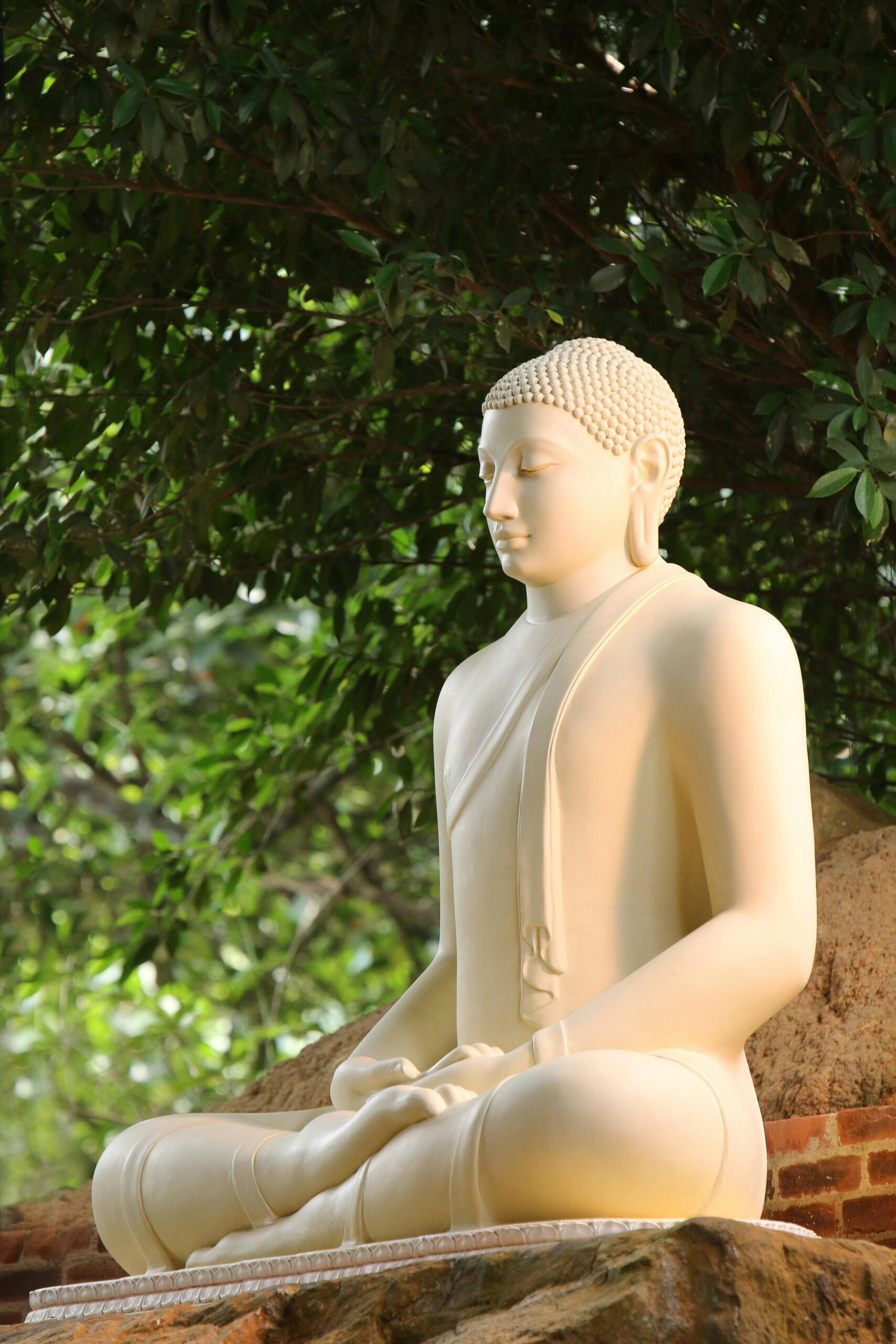
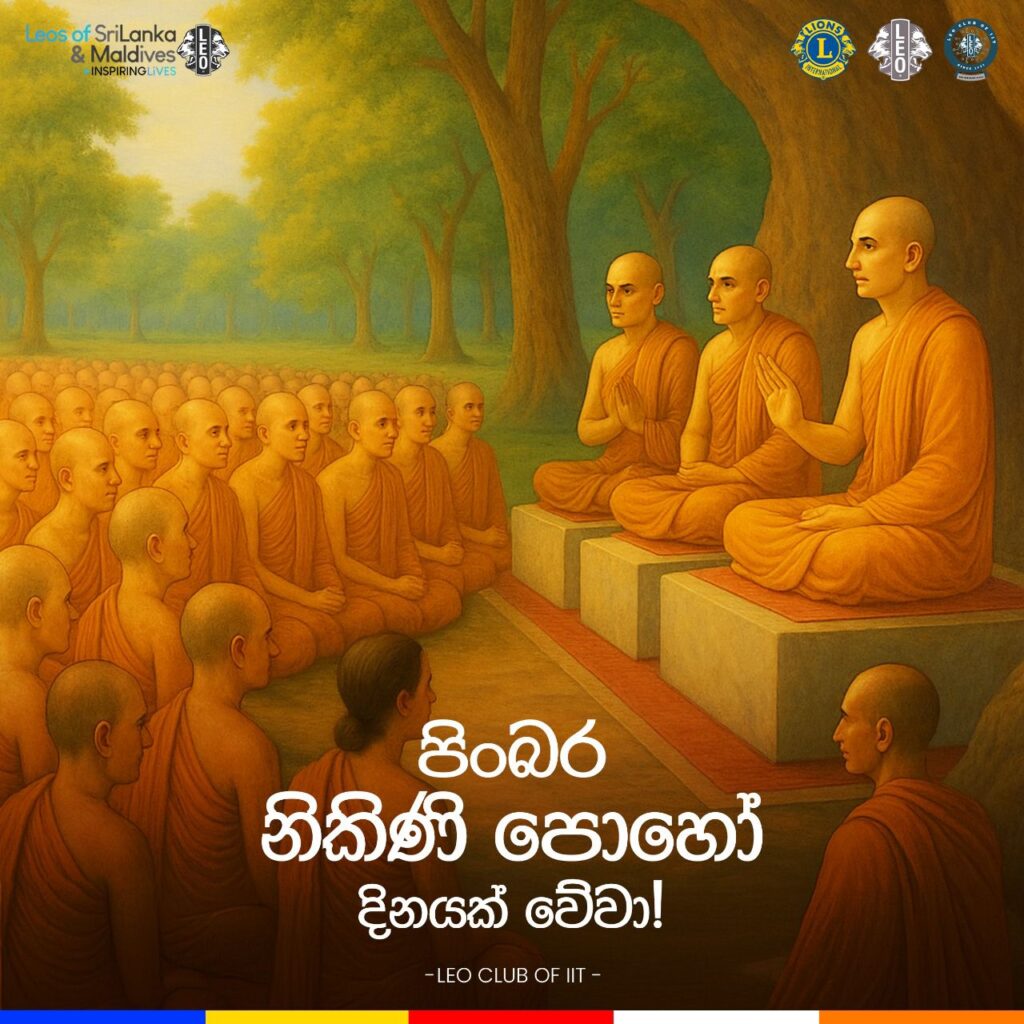
Nikini Poya, which falls on the full moon day of August, is one of the most sacred days in Sri Lanka’s Buddhist calendar. It’s a time to remember important moments in Buddhist history and to dedicate oneself to spiritual growth and compassion.
Historical Significance
- First Dhamma Sangayana (Council) – Held three months after the Buddha’s Parinibbana (passing away), led by Arahant Mahakassapa with 500 Arahants gathering to recite, preserve, and safeguard the Buddha’s teachings (Dhamma) and disciplinary code (Vinaya).
- Establishment of the Bhikkhuni Sangha – Queen Mahapajapati Gotami, the Buddha’s foster mother, became the first woman to be ordained as a Bhikkhuni (Buddhist nun), paving the way for women’s full participation in monastic life.
Across Sri Lanka, Nikini Poya is observed with deep devotion. From early morning, devotees dressed in white gather at temples to observe Sil (the Eight Precepts), engage in meditation, listen to Dhamma sermons, offer flowers, light oil lamps, and participate in Dansal (free food and drink offerings) to share kindness with the community.
Nikini Poya also marks the beginning of the Vas retreat in Sri Lanka’s Buddhist tradition. During this three-month rainy season retreat, monks stay in one temple for intensive meditation, study, and guiding laypeople, while devotees use this period for self-reflection and merit-making.
For Buddhists in Sri Lanka, Nikini Poya is more than a date, it’s a reminder of unity, heritage, and the timeless values of wisdom, compassion, and discipline that continue to shape the island’s culture.
May the serene light of Sri Lanka’s Nikini Poya inspire your heart to walk the path of peace, truth, and kindness.
-Uvini Wickramaarachchi